
As a Senior Plumbing Technician with over 14 years of experience in the View Park area, I know that when a plumbing need arises, the first question on every homeowner's mind is, "How much is this going to cost?" It's a fair question, and my goal here is to provide a transparent guide to backflow preventer testing and installation costs. Especially as we navigate the August fire season, our outdoor water use for cleanup and irrigation often increases. This puts extra stress on our water systems, making it the perfect time to ensure your property is protected against contamination.
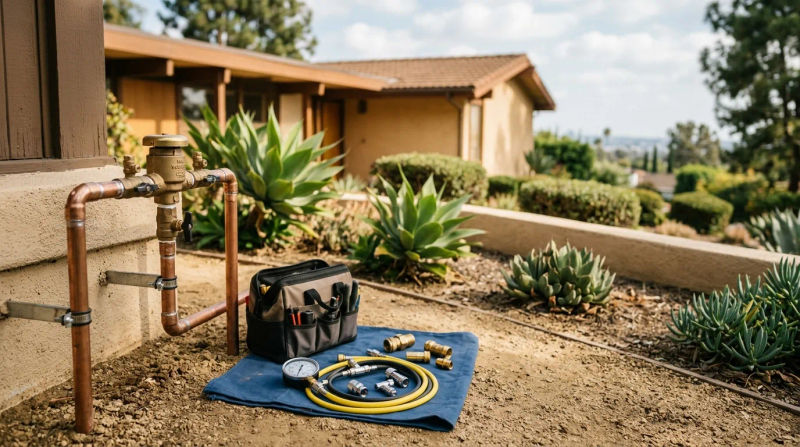
Backflow is the unwanted reversal of water flow, which can pull contaminated water from sources like irrigation systems, pools, or boilers back into your clean drinking water supply. A backflow preventer is a crucial safety device that stops this from happening. Let's break down what you can expect to invest in this essential protection for your home.
Average Costs in View Park, CA
Here in View Park and greater Los Angeles County, pricing for backflow services is generally consistent, but it's important to have a realistic baseline. These figures reflect professional, licensed, and certified work. Keep in mind that these are estimates for 2026, and a precise quote will always depend on your specific situation.
- Annual Backflow Testing: For most residential properties, you can expect the cost for irrigation backflow testing View Park CA to range from $95 to $175. This service includes a certified technician connecting specialized gauges to your device, running a series of pressure tests to ensure the internal checks and valves are working correctly, and filing the official report with the local water authority.
- New Backflow Preventer Installation: The backflow preventer cost for a new installation varies significantly based on the type of device required.
- Pressure Vacuum Breaker (PVB): Commonly used for irrigation systems, a new PVB installation typically costs between $450 and $900. This includes the device, parts, and labor.
- Reduced Pressure Zone (RPZ) Assembly: These are more complex and offer a higher level of protection, often required for commercial properties or high-hazard residential situations. Installation costs for an RPZ can range from $800 to $1,800 or more, depending on the size and complexity.
- Backflow Preventer Replacement: If your existing device fails its annual test and cannot be repaired, a replacement will be necessary. The pressure vacuum breaker replacement price is very similar to a new installation, generally falling between $400 and $850. The cost might be slightly lower than a brand-new install if the existing pipes are in good shape and don't require significant modification.
- Repairs: Repair costs are the most variable. A simple cleaning or replacement of a rubber seal might cost $150 to $300. A full rebuild of the internal components could be $300 to $500+. Often, if a device is old or severely corroded, replacement is the more cost-effective long-term solution.
- Permits: Don't forget to budget for administrative costs. The backflow permit fees Los Angeles County typically range from $50 to $150, depending on the municipality. A professional plumber will usually handle the paperwork for you, but the fee itself is a separate line item.
Factors That Affect Price
Two jobs that seem identical on the surface can have very different final costs. As technicians, we assess several factors when building a quote. Understanding these will help you see why your neighbor’s price might be different from yours.
- Type and Size of the Device: As mentioned, a complex RPZ assembly costs more in parts and labor than a simpler PVB. The diameter of your water line also matters - a 1-inch device is more expensive than a 3/4-inch device.
- Accessibility of the Plumbing: Where is the device located? A backflow preventer that is easily accessible in an open yard will be less labor-intensive to service than one located in a tight crawlspace, behind dense shrubbery, or in an underground vault that needs to be pumped out.
- Condition of Existing Pipes: This is where I see the history of a neighborhood play a big role. Many homes in View Park were built in the 1950s. These post-war homes often have original galvanized or copper plumbing. If we need to cut into an old, corroded pipe to install a new device, it may require replacing a section of the line to ensure a secure, leak-free connection that meets modern code. This adds labor and material costs but is critical for a reliable installation.
- Scope of Work: Is this a straightforward replacement, or are we running a new line for an irrigation system that never had a backflow preventer? The more excavation, piping, and fittings required, the higher the cost.
- Emergency vs. Scheduled Service: A planned installation during regular business hours will always be more affordable than an emergency call-out on a weekend because your water has been shut off due to a failed device.
How to Get the Best Value
Getting the "best value" isn't just about finding the lowest price - it's about ensuring safety, compliance, and long-term reliability. A cheap, improper installation can lead to failed inspections, fines, and - worst of all - a contaminated water supply.
- Stay on Top of Annual Testing: Proactive annual testing is your first line of defense. It allows our technicians to catch small issues before they become major failures, saving you from the higher cost and hassle of an emergency replacement.
- Bundle Services: If you know your backflow test is due, ask if it can be scheduled with other plumbing maintenance, like a water heater flush or an outdoor spigot repair. Some companies offer discounts for bundling multiple services in a single visit.
- Hire a Certified Professional: This is non-negotiable. Backflow testing and installation must be performed by a technician with current certification recognized by Los Angeles County. Our crews are not only certified but follow organized workflows and standardized processes to ensure every job is done efficiently and correctly the first time.
- Ask for an Itemized Quote: A trustworthy contractor will provide a detailed quote that breaks down the cost of the device, labor, parts, and permit fees. This transparency helps you understand exactly what you're paying for.
Questions to Ask Your Contractor
When you call for an estimate, you are in control. Arm yourself with the right questions to vet your plumber and ensure you're getting a qualified professional.
- Are you and your technicians certified for backflow testing in this jurisdiction?
- Does your quote include pulling the permit and managing the paperwork?
- What specific type of backflow preventer are you recommending for my irrigation system, and why?
- If the device fails the test, will you provide a separate quote for repair vs. replacement options?
- What is your warranty on the new device and the installation labor?
- Is your company licensed and insured?
Protecting your family’s drinking water is one of the most important investments you can make in your home. While the backflow preventer cost can seem like just another expense, it provides essential peace of mind, especially during times when our water infrastructure is under stress. By understanding the costs and choosing a qualified professional, you ensure your home remains safe and compliant.
For a personalized estimate in View Park, contact Ostrichplumbing.com for a free consultation. We’re here to help you navigate the process with clear, expert guidance.